
吴裕雄--天生自然 PYTHON数据分析:基于Keras的CNN分析太空深处寻找系外行星数据
#We import libraries for linear algebra, graphs, and evaluation of results

import numpy as np

import matplotlib.pyplot as plt

from sklearn.linear_model import LinearRegression

from sklearn.preprocessing import StandardScaler

from sklearn.metrics import roc_curve, roc_auc_score

from scipy.ndimage.filters import uniform_filter1d
#Keras is a high level neural networks library, based on either tensorflow or theano

from keras.models import Sequential, Model

from keras.layers import Conv1D, MaxPool1D, Dense, Dropout, Flatten, BatchNormalization, Input, concatenate, Activation

from keras.optimizers import Adam
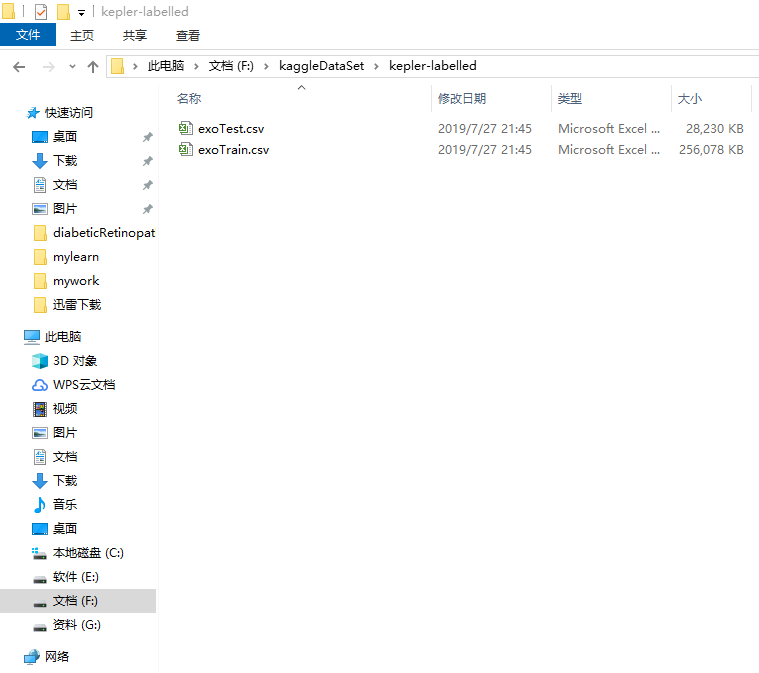
INPUT_LIB = 'F:\\kaggleDataSet\\kepler-labelled\\'

raw_data = np.loadtxt(INPUT_LIB + 'exoTrain.csv', skiprows=1, delimiter=',')

x_train = raw_data[:, 1:]

y_train = raw_data[:, 0, np.newaxis] - 1.

raw_data = np.loadtxt(INPUT_LIB + 'exoTest.csv', skiprows=1, delimiter=',')

x_test = raw_data[:, 1:]

y_test = raw_data[:, 0, np.newaxis] - 1.

del raw_data
x_train = ((x_train - np.mean(x_train, axis=1).reshape(-1,1))/ np.std(x_train, axis=1).reshape(-1,1))

x_test = ((x_test - np.mean(x_test, axis=1).reshape(-1,1)) / np.std(x_test, axis=1).reshape(-1,1))
x_train = np.stack([x_train, uniform_filter1d(x_train, axis=1, size=200)], axis=2)

x_test = np.stack([x_test, uniform_filter1d(x_test, axis=1, size=200)], axis=2)
model = Sequential()

model.add(Conv1D(filters=8, kernel_size=11, activation='relu', input_shape=x_train.shape[1:]))

model.add(MaxPool1D(strides=4))

model.add(BatchNormalization())

model.add(Conv1D(filters=16, kernel_size=11, activation='relu'))

model.add(MaxPool1D(strides=4))

model.add(BatchNormalization())

model.add(Conv1D(filters=32, kernel_size=11, activation='relu'))

model.add(MaxPool1D(strides=4))

model.add(BatchNormalization())

model.add(Conv1D(filters=64, kernel_size=11, activation='relu'))

model.add(MaxPool1D(strides=4))

model.add(Flatten())

model.add(Dropout(0.5))

model.add(Dense(64, activation='relu'))

model.add(Dropout(0.25))

model.add(Dense(64, activation='relu'))

model.add(Dense(1, activation='sigmoid'))
def batch_generator(x_train, y_train, batch_size=32):

    """

    Gives equal number of positive and negative samples, and rotates them randomly in time

    """

    half_batch = batch_size // 2

    x_batch = np.empty((batch_size, x_train.shape[1], x_train.shape[2]), dtype='float32')

    y_batch = np.empty((batch_size, y_train.shape[1]), dtype='float32')

    yes_idx = np.where(y_train[:,0] == 1.)[0]

    non_idx = np.where(y_train[:,0] == 0.)[0]

    while True:

        np.random.shuffle(yes_idx)

        np.random.shuffle(non_idx)

        x_batch[:half_batch] = x_train[yes_idx[:half_batch]]

        x_batch[half_batch:] = x_train[non_idx[half_batch:batch_size]]

        y_batch[:half_batch] = y_train[yes_idx[:half_batch]]

        y_batch[half_batch:] = y_train[non_idx[half_batch:batch_size]]

        for i in range(batch_size):

            sz = np.random.randint(x_batch.shape[1])

            x_batch[i] = np.roll(x_batch[i], sz, axis = 0)

        yield x_batch, y_batch
#Start with a slightly lower learning rate, to ensure convergence

model.compile(optimizer=Adam(1e-5), loss = 'binary_crossentropy', metrics=['accuracy'])

hist = model.fit_generator(batch_generator(x_train, y_train, 32),

                           validation_data=(x_test, y_test),

                           verbose=0, epochs=5,

                           steps_per_epoch=x_train.shape[1]//32)
#Then speed things up a little

model.compile(optimizer=Adam(4e-5), loss = 'binary_crossentropy', metrics=['accuracy'])

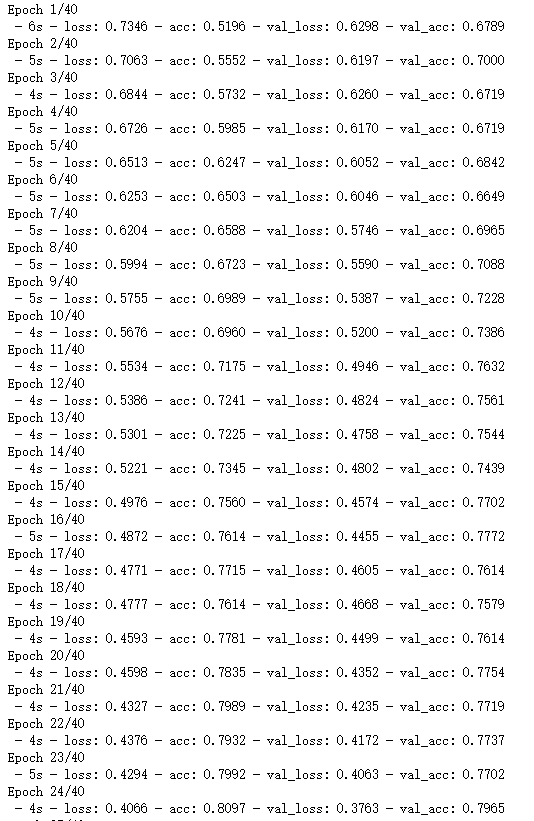
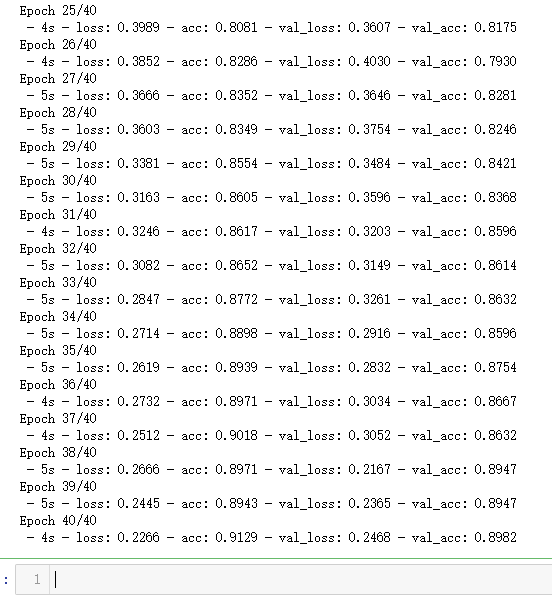
hist = model.fit_generator(batch_generator(x_train, y_train, 32),

                           validation_data=(x_test, y_test),

                           verbose=2, epochs=40,

                           steps_per_epoch=x_train.shape[1]//32)
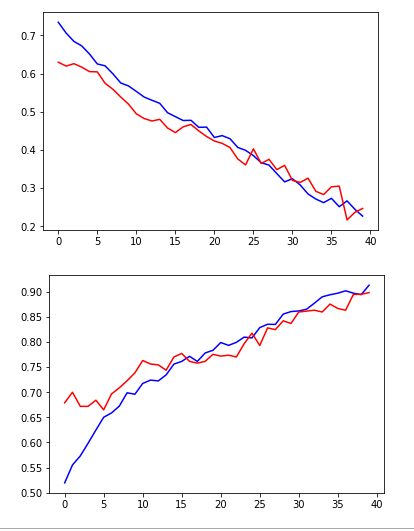
plt.plot(hist.history['loss'], color='b')

plt.plot(hist.history['val_loss'], color='r')

plt.show()

plt.plot(hist.history['acc'], color='b')

plt.plot(hist.history['val_acc'], color='r')

plt.show()
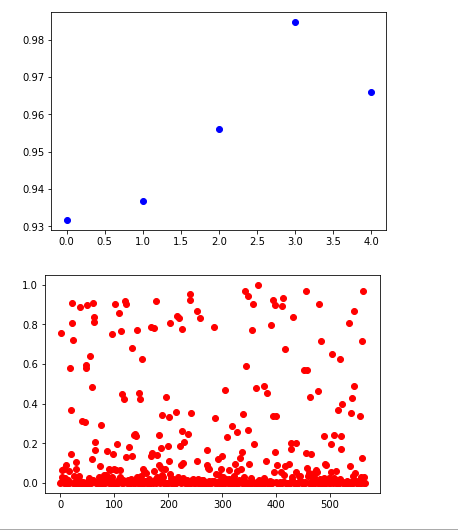
non_idx = np.where(y_test[:,0] == 0.)[0]

yes_idx = np.where(y_test[:,0] == 1.)[0]

y_hat = model.predict(x_test)[:,0]
plt.plot([y_hat[i] for i in yes_idx], 'bo')

plt.show()

plt.plot([y_hat[i] for i in non_idx], 'ro')

plt.show()
y_true = (y_test[:, 0] + 0.5).astype("int")

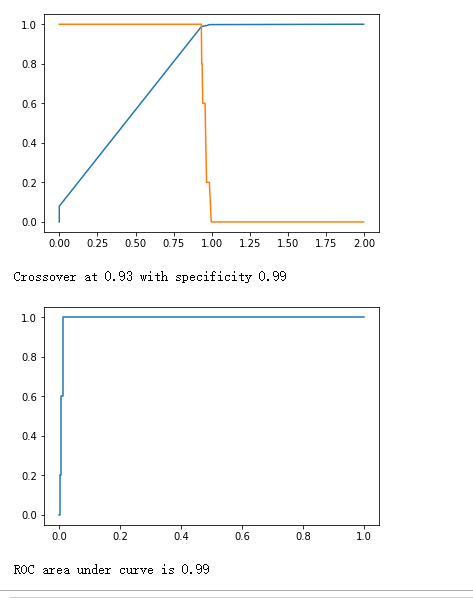
fpr, tpr, thresholds = roc_curve(y_true, y_hat)

plt.plot(thresholds, 1.-fpr)

plt.plot(thresholds, tpr)

plt.show()

crossover_index = np.min(np.where(1.-fpr <= tpr))

crossover_cutoff = thresholds[crossover_index]

crossover_specificity = 1.-fpr[crossover_index]

print("Crossover at {0:.2f} with specificity {1:.2f}".format(crossover_cutoff, crossover_specificity))

plt.plot(fpr, tpr)

plt.show()

print("ROC area under curve is {0:.2f}".format(roc_auc_score(y_true, y_hat)))
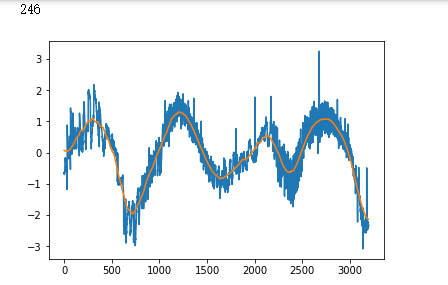
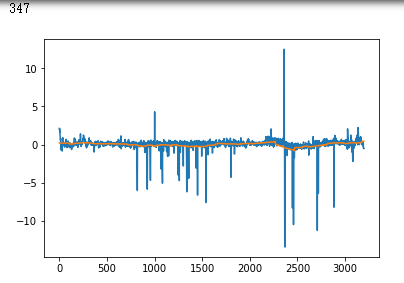
false_positives = np.where(y_hat * (1. - y_test) > 0.5)[0]

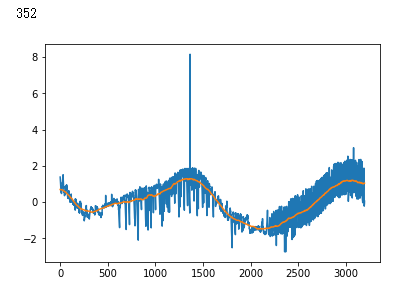
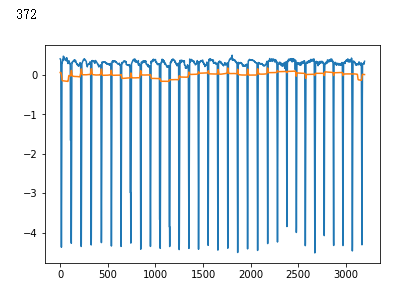
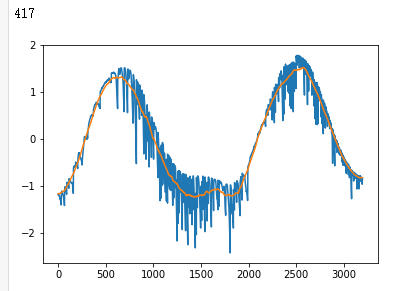
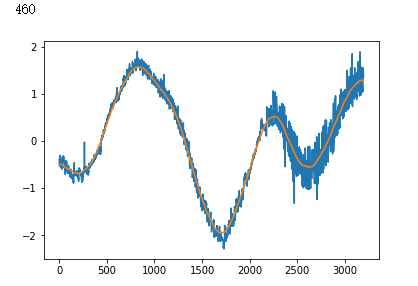
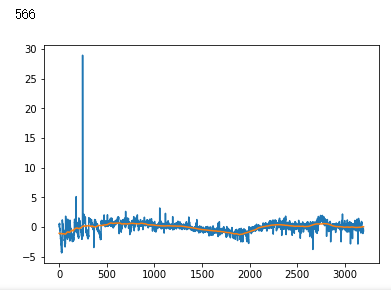
for i in non_idx:

    if y_hat[i] > crossover_cutoff:

        print(i)

        plt.plot(x_test[i])

        plt.show()
吴裕雄--天生自然 PYTHON数据分析:基于Keras的CNN分析太空深处寻找系外行星数据的更多相关文章
- 吴裕雄--天生自然 python数据分析:健康指标聚集分析(健康分析)
# This Python 3 environment comes with many helpful analytics libraries installed # It is defined by ...
- 吴裕雄--天生自然 PYTHON数据分析:钦奈水资源管理分析
df = pd.read_csv("F:\\kaggleDataSet\\chennai-water\\chennai_reservoir_levels.csv") df[&quo ...
- 吴裕雄--天生自然 python数据分析:基于Keras使用CNN神经网络处理手写数据集
import pandas as pd import numpy as np import matplotlib.pyplot as plt import matplotlib.image as mp ...
- 吴裕雄--天生自然 PYTHON数据分析:糖尿病视网膜病变数据分析(完整版)
# This Python 3 environment comes with many helpful analytics libraries installed # It is defined by ...
- 吴裕雄--天生自然 PYTHON数据分析:所有美国股票和etf的历史日价格和成交量分析
# This Python 3 environment comes with many helpful analytics libraries installed # It is defined by ...
- 吴裕雄--天生自然 python数据分析:葡萄酒分析
# import pandas import pandas as pd # creating a DataFrame pd.DataFrame({'Yes': [50, 31], 'No': [101 ...
- 吴裕雄--天生自然 PYTHON数据分析:人类发展报告——HDI, GDI,健康,全球人口数据数据分析
import pandas as pd # Data analysis import numpy as np #Data analysis import seaborn as sns # Data v ...
- 吴裕雄--天生自然 python数据分析:医疗费数据分析
import numpy as np import pandas as pd import os import matplotlib.pyplot as pl import seaborn as sn ...
- 吴裕雄--天生自然 PYTHON数据分析:医疗数据分析
import numpy as np # linear algebra import pandas as pd # data processing, CSV file I/O (e.g. pd.rea ...
随机推荐
- python学习笔记--数据类型和变量总结
1.数据类型 字符串 数字 列表 元祖 字典 2.可变不可变划分 可变:列表,字典 不可变:字符串,数字,元祖 举例:字符串,通过id查看字符串变量在内存中的地址.两次存的值不一样,这就说明了内存重新 ...
- JAVA多线程之状态转换图
线程状态转换图如下: 1.新建(new):线程对象被创建后就进入了新建状态.如:Thread thread = new Thread(); 2.就绪状态(Runnable):也被称为“可执行状态”.线 ...
- 寒假day06
今天完善了毕设的数据抽取功能,新增了几点: 1.已经抽取过的表由系统给出相应提示 2.生成数据抽取记录并展示 3.界面优化
- RegressionTree(回归树)
1.概述 回归树就是用树模型做回归问题,每一片叶子都输出一个预测值.预测值一般是该片叶子所含训练集元素输出的均值, 即
- pytorch(ch5
读取图片数据集::# -*- coding: utf-8 -*-import torch as tfrom torch.utils import dataimport osfrom PIL impor ...
- Java--包密封
参考:http://blog.csdn.net/zhifeiyu2008/article/details/8829637 http://blog.csdn.net/technerd/article/ ...
- Linux-使用syslog来记录调试信息
1.有三个函数:openlog.syslog.closelog 2.一般的log信息都在操作系统的/var/log/messages这个文件中存储着,但是ubuntu中是在/var/log/syslo ...
- c++语法(1)
#include<iostream> #include<windows.h> using namespace std; class Parents { public: ; // ...
- Java实战——简介
由于下学期要学习JavaEE所以打算将JavaSE的知识再重新学习一遍,打好基础的同时也希望自己有新的收获和更深刻的理解. 这次复习主要是参考廖雪峰老师的java教程,每学习完一章对其中一些要点进行总 ...
- TZOJ-STL系列题
C++实验:STL之vector #include <bits/stdc++.h> using namespace std; void Input(vector<int>&am ...